

I appreciate the continued media and federal focus on autism. We absolutely need more visibility and more support for families (see Resource 1: NY Times podcast). However, we cannot keep explaining away the rise in autism by pointing to “better diagnosis” or “broader criteria.” That narrative doesn’t reflect what families and data are showing. I especially appreciate recent attention on the growing needs within the profound autism community.
In 2013, significant changes were made to the Diagnostic and Statistical Manual of Mental Disorders (DSM-5.) DSM is the diagnostic criteria used to diagnose autism. These changes made autism more exclusive, not more inclusive. Asperger syndrome and PDD-NOS were removed as diagnostic categories (see Resource 2).
I applaud Catherine Lord, PhD, Co-Chair, Scientific Research Council, Child Mind Institute, for calling for more diagnostic specificity. We need it. We should formally recognize profound autism and restore diagnostic clarity for individuals who previously received Asperger syndrome diagnoses. The right label can increase understanding and what support is needed. When we know better, we can do better. (Thank you Maya Angelou!) In all facets of autism, we need to do better.
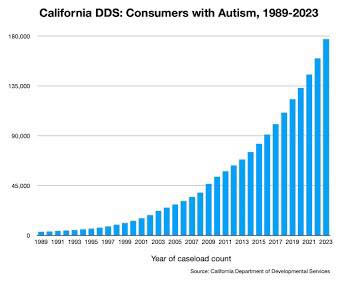
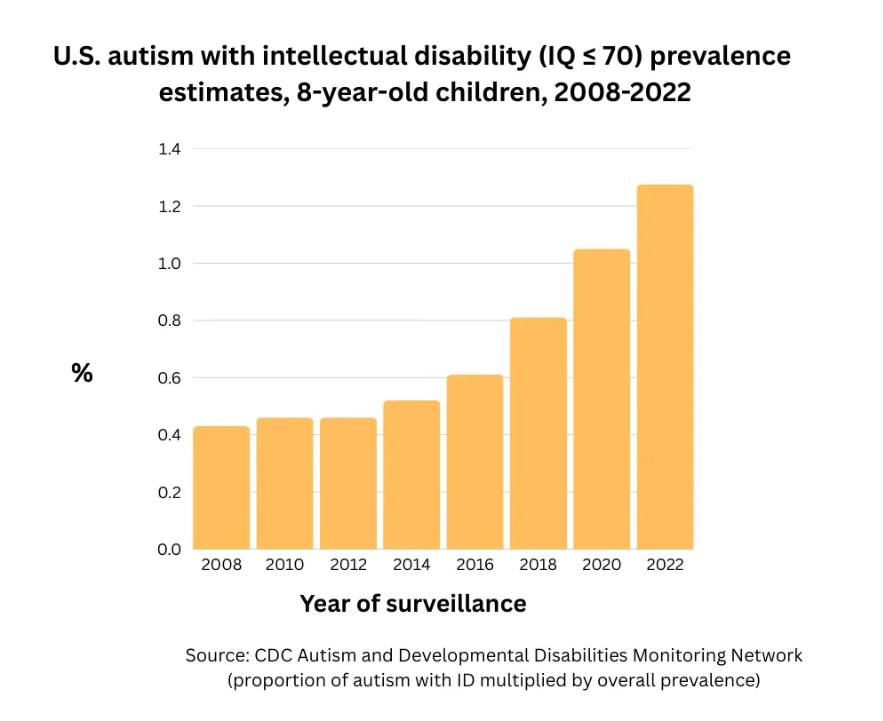
We have extensive data showing the rapid increase in autism diagnoses (see California DDS data in the blue chart). The group requiring the highest level of support is growing the fastest. Today, profound autism represents roughly 25% of all diagnoses (see yellow chart). Conversely, according to Dr. Walter Zahorodny at Rutgers University—one of the nation’s leading CDC autism investigators—the group often associated with the lowest support needs (formerly Aspergers Syndrome) accounts for under 10% of autism diagnoses (see Resource 3).
This widening range underscores the need for more precise diagnostic categories that accurately reflect very different levels of support, services, and lived experiences. Families deserve an evaluation system that meaningfully describes their needs—not one that obscures them.
No one person or perspective should dictate whether the autism community “should” or “should not” discuss cure. This is a complicated and deeply personal topic. Resource 4 shares important nuance on why the concept of cure remains part of the broader conversation. Everyone deserves a chance to be healthy and lead a wonderful life.
To truly understand autism, we must examine the history of diagnostic changes, look closely at study methodologies, and stop minimizing or mischaracterizing the real increase
in prevalence (see Resource 5). TACA has been advocating for better understanding for 25 years. More support and more research are urgently needed. Families are struggling. At TACA, we see this every day—welcoming over 1,000 new families every month who need help navigating services, care, and hope.
Resources:
 Moving Autism Forward by Team TACA
Leave a comment